Physical Address
304 North Cardinal St.
Dorchester Center, MA 02124
Physical Address
304 North Cardinal St.
Dorchester Center, MA 02124


If you’ve ever wanted to learn a language in 30 days, you already know it’s not just about words — it’s about unlocking new worlds. Speaking another language builds confidence, creates opportunities, and connects you with people and cultures on a deeper level. Whether you’re leveling up as a digital nomad, preparing for a move abroad, or just want to impress at the next rooftop bar in Medellín, mastering a new language fast isn’t a dream — it’s a strategy.
Here’s how to make it happen, step by step.

When you set out to learn a language in 30 days, your goal isn’t to memorize every word — it’s to master the 20 percent that drives 80 percent of conversation. You don’t need 10,000 words to communicate confidently; you need the core 500–1000 most-used phrases that make daily life flow — greetings, verbs, questions, and connectors that tie your thoughts together.
Focus your energy on practical vocabulary and everyday expressions that let you order food, ask for directions, or hold short conversations naturally. The faster you use what you learn, the faster you build fluency.
Use tools like:
| Tool | Best For | Strengths | Weaknesses | Cost |
|---|---|---|---|---|
| 🧩 Anki | Building long-term memory | Spaced-repetition flashcards, full customization, free decks for most languages | Slightly technical setup for beginners | Free / Open Source |
| 🚀 Memrise | Fun, structured vocab practice | Real-world video clips, gamified learning, community-made courses | Limited grammar / speaking focus | Free + Premium (~$8 mo) |
| 🎧 Fluent Forever | Pronunciation & memory training | Teaches pronunciation first, custom flashcards tied to images + audio | Smaller language catalog | Paid (~$9 mo) |
Each of these tools uses spaced repetition — a scientifically proven method that tells your brain when to review material so you never forget it.
💡 Pro Tip: Focus on phrases instead of single words. Learning sentences like “Can I get…,” “Where is the nearest…,” or “I like this because…” helps you communicate faster and develop instinctive grammar.
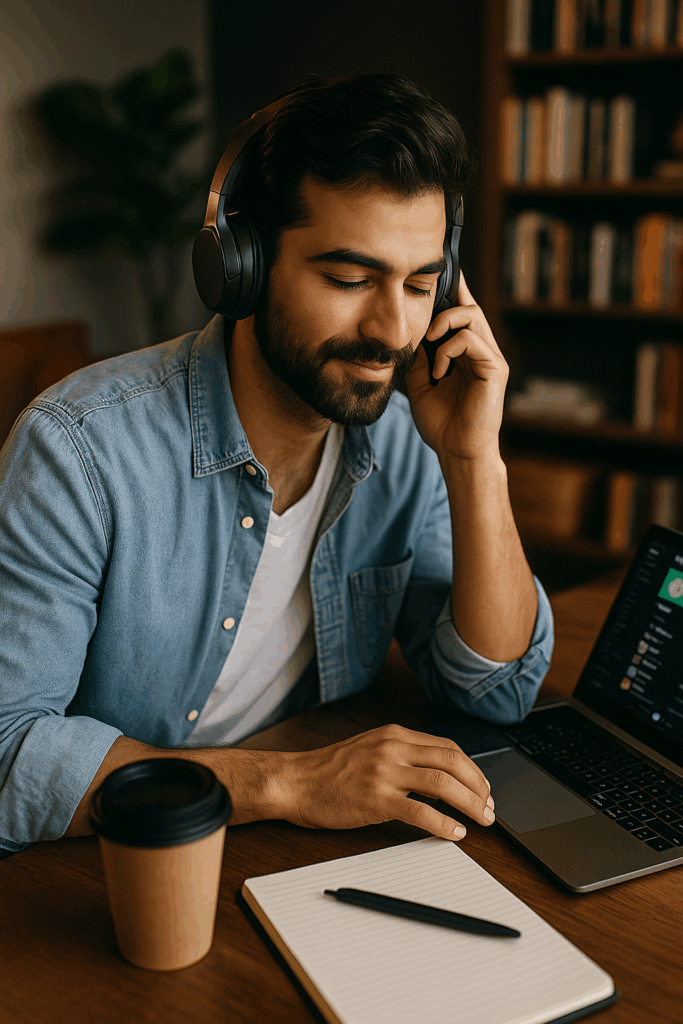
Listening builds comprehension — the foundation of fluency.
If you want to learn a language in 30 days, your ears are your most powerful tool. Listening builds comprehension — it’s the foundation of fast fluency. The goal isn’t to understand every word, but to train your brain to recognize rhythm, tone, and emotion long before you translate them consciously.
To accelerate your progress, replace your usual media for one month with native-language content:
At first, you’ll barely catch a word. Then, without realizing it, patterns start to click — that’s fluency forming in real time.
💡 Pro Tip: Don’t multitask at first. Give your ears full attention for 15–20 minutes daily. Within two weeks, you’ll begin to hear before you think — the mark of real progress.
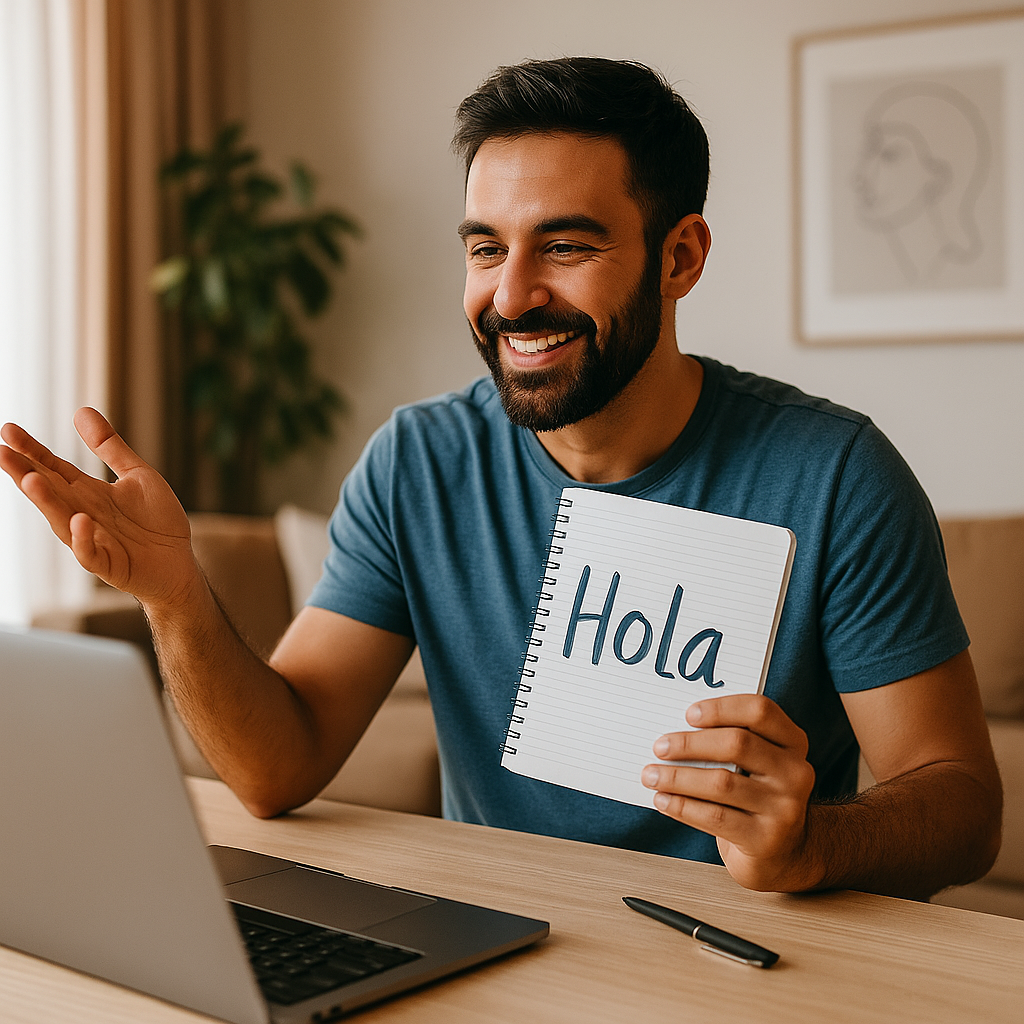
If you want to learn a language in 30 days, you can’t just study — you have to use it.
Speaking activates the part of your brain that transforms passive knowledge into real communication. The faster you start, the faster you sound natural.
Even if you only know ten words, combine them into real sentences. Confidence grows faster than vocabulary.
Use these proven tools to connect with real people:
💡 Pro Tip: Don’t wait to “be ready.” Speak now. Every awkward sentence is a deposit in your fluency account.
| Time | Activity | Goal |
|---|---|---|
| 5 min | Warm up with Pimsleur audio | Get your mouth used to speaking the language |
| 10 min | Chat on HelloTalk or Tandem | Build real conversation flow |
| 10 min | Record yourself talking about your day | Practice thinking in the language |
| 5 min | Review new words in Anki | Lock in vocabulary from your conversations |
Follow this for 30 days and you’ll sound more confident, natural, and spontaneous than 99 % of people who’ve been “studying” for months.
💬 Pro Tip: Record yourself. Hearing your own progress boosts confidence and fixes pronunciation.

You don’t need a plane ticket to achieve fluency — you can immerse yourself in a new language from anywhere. Real fluency comes when the language surrounds you: on your phone, in your thoughts, and in the way you move through your day.
Transform your environment into a bilingual zone:
Pair your immersion with the tools that keep it active:
The more your brain sees, hears, and interacts with the language, the faster it normalizes it. Immersion works because it removes translation — you start thinking in the new language instead of converting.
💡 Pro Tip: Pick one day a week to go “all in” — text, journal, order food, and even think only in your target language. You’ll feel uncomfortable at first, but that’s exactly where fluency starts.
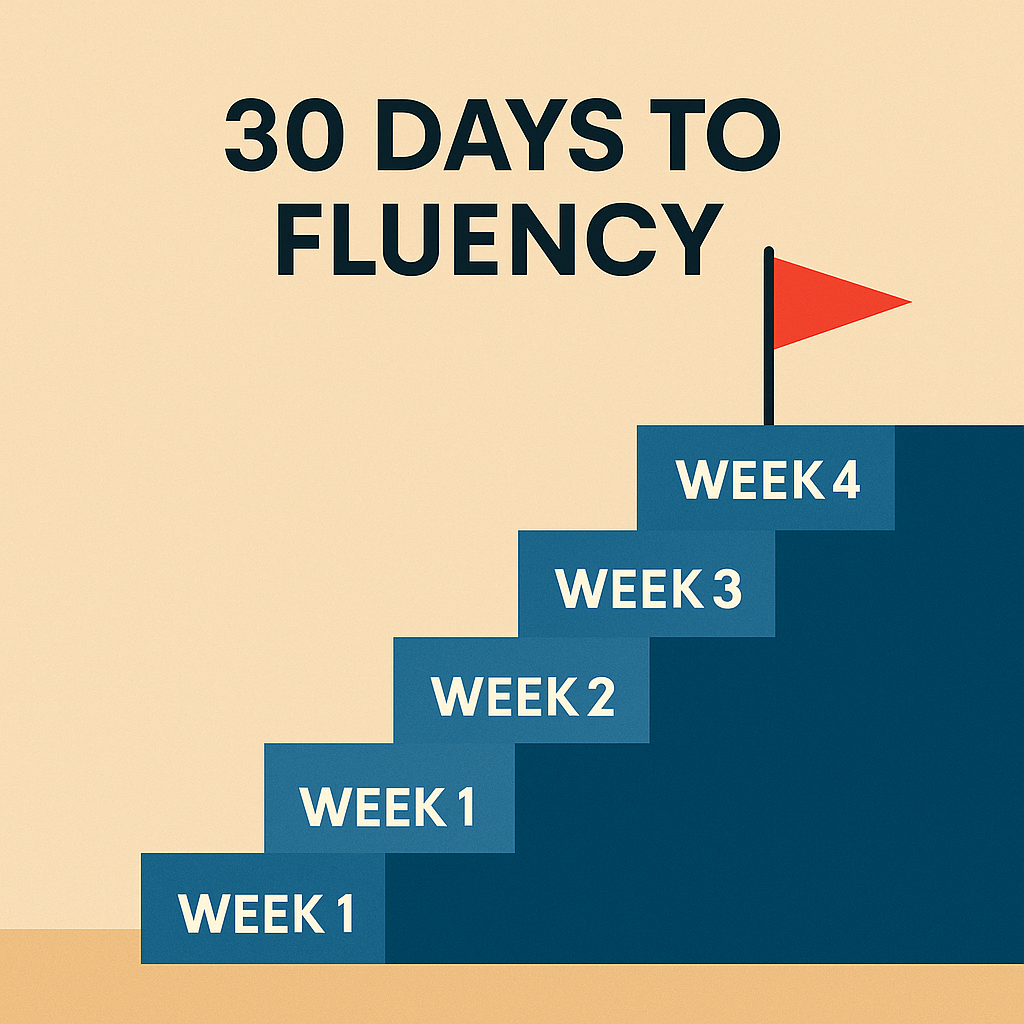
If you truly want to learn a language in 30 days, you need more than motivation — you need momentum. Fluency grows when small, consistent habits stack up daily. This plan gives your learning structure, focus, and results without burnout.
Focus: Building core vocabulary and pronunciation.
Focus: Speaking from day one.
Focus: Think and live in the language.
Focus: Refinement and real usage.
After 30 days, you’ll have momentum. Don’t stop. Transition to a “maintenance mode” — 15 minutes of active learning daily plus weekly conversations. The consistency compounds over time. Fluency isn’t just about repetition — it’s about connection. Watch films you love, talk about your passions, flirt in the language, read quotes. When the content matters to you, your brain retains it faster.
When you decide to learn a language in 30 days, you’re not just learning words — you’re rewiring how you think, communicate, and connect. Every flashcard, podcast, and awkward first conversation is part of a bigger transformation: becoming the kind of man who can walk into any room in any country and hold his own.
Fluency isn’t about perfection — it’s about progress. It’s about showing up daily with discipline, curiosity, and the drive to grow. After all, learning a language isn’t just a skill — it’s a signal. It says you value culture, challenge, and confidence.
Because the most attractive thing a man can wear isn’t his outfit or cologne — it’s the confidence to connect with anyone, anywhere, in any language.
So start today.
Open the app. Book the lesson. Play that foreign podcast. Because confidence — like language — is built one word at a time.
💡 Stay Sharp. Stay Global. Stay Fresh.
Subscribe to the Life Of Fresh newsletter for more guides on travel, style, and personal growth — designed for men building lives without borders.
Read next: Medellín Digital Nomad Guide: Live Like a King →


Get insider updates on men’s lifestyle, travel, money, and success — delivered straight to your inbox every week.