Physical Address
304 North Cardinal St.
Dorchester Center, MA 02124
Physical Address
304 North Cardinal St.
Dorchester Center, MA 02124

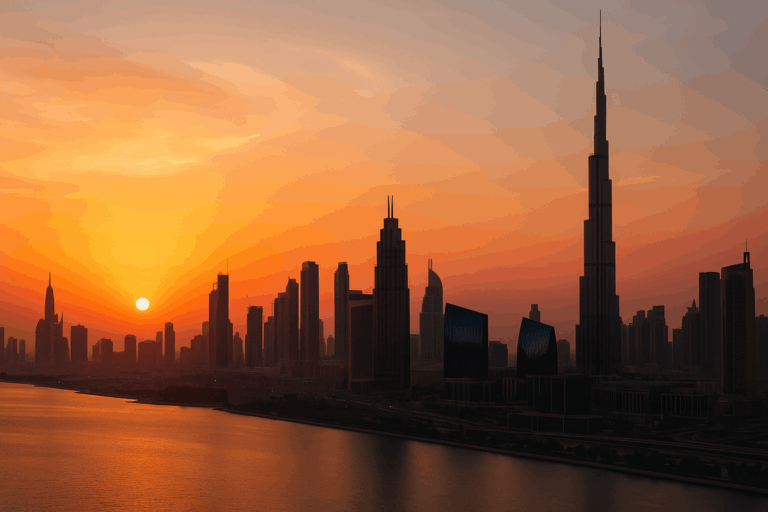
Iran war Dubai real estate fears are rising as investors wonder whether conflict in the Middle East could impact the UAE property market. Dubai has experienced several real estate booms over the past two decades. However, geopolitical tensions in the region always raise an important question: could war cause property prices to fall?
At first glance, the concern seems reasonable. After all, regional instability can shake financial markets and weaken investor confidence. When headlines mention missiles, sanctions, or military escalation, many investors immediately assume that nearby real estate markets will suffer.
However, the relationship between conflict and property markets is rarely that simple. In fact, Dubai has historically behaved very differently from most global cities during times of geopolitical tension. Instead of losing investors, the city has often attracted new capital as wealthy individuals move money into stable financial hubs.
Therefore, the real question is not just whether war could hurt Dubai’s property market. Instead, investors want to know how the Iran conflict might influence Dubai real estate in both the short term and the long term.
In this article, we will analyze whether the Iran war could crash Dubai real estate, how global conflicts have affected the market in the past, and what investors should expect if tensions continue to rise.
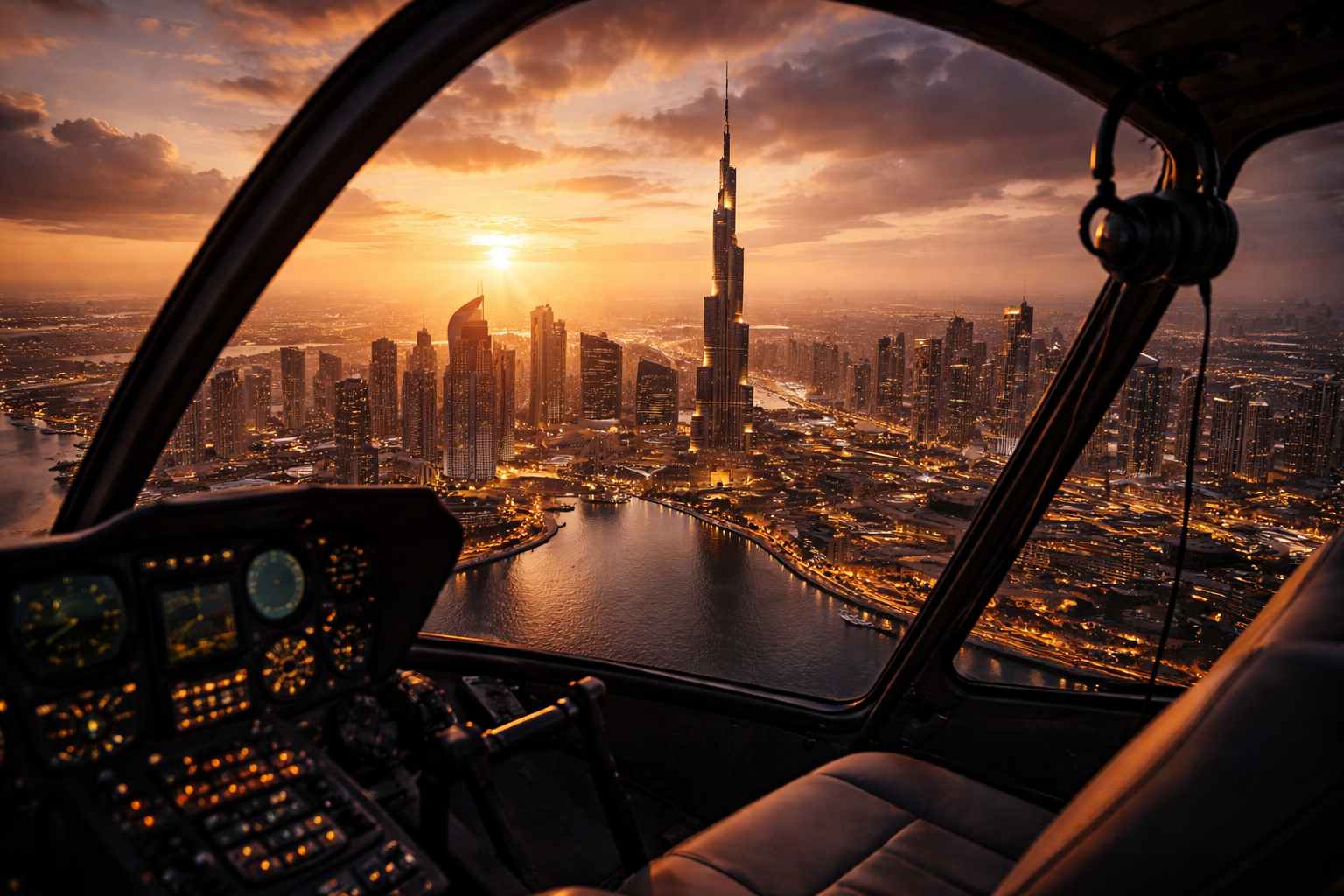
The topic of Iran war Dubai real estate has quickly become a concern for global investors. Whenever tensions rise in the Middle East, financial markets tend to react first. As a result, property buyers begin asking whether conflict could disrupt Dubai’s booming property market.
Dubai’s real estate sector is deeply connected to global capital flows. International investors play a major role in driving demand for luxury apartments, villas, and new developments across the city. Therefore, geopolitical headlines can quickly influence investor sentiment.
However, history shows that the relationship between conflict and Dubai real estate is not always negative. In fact, during several past crises, the city actually attracted more capital as investors looked for stable markets.
To understand why investors are watching the situation closely, it helps to examine three key factors influencing Iran war Dubai real estate concerns.

First, geopolitical instability can temporarily affect investor confidence. When news about military escalation spreads, investors often become cautious and delay major financial decisions. Real estate purchases, especially international ones, tend to slow down during periods of uncertainty.
Nevertheless, Dubai has built a reputation as one of the most stable economic hubs in the Middle East. Strong infrastructure, global connectivity, and business-friendly policies continue to attract international capital even during uncertain times.
For example, during the Russia-Ukraine conflict, many wealthy investors moved capital into Dubai’s property market. As a result, luxury real estate demand surged across areas such as Palm Jumeirah and Dubai Marina. According to research from the real estate consultancy Knight Frank, Dubai recorded significant growth in luxury property transactions during this period.
Another reason investors closely monitor Iran war Dubai real estate developments is the international nature of the market. Unlike many cities, Dubai relies heavily on foreign buyers rather than domestic demand alone.
Because of this, global wealth movements play a large role in determining property prices. When instability increases in one region, capital often moves toward cities considered safer for business and investment.
Interestingly, Dubai has often benefited from this pattern. Wealth migration from regions experiencing political uncertainty has historically supported property demand in the UAE. Investors from Europe, Asia, and the Middle East frequently choose Dubai because of its tax advantages and stable financial system.
Dubai Land Department statistics
Despite Dubai’s reputation as a safe haven, analysts still monitor several potential risks. Rising geopolitical tensions could temporarily slow tourism, disrupt global markets, or reduce investor confidence in the short term.
Furthermore, Dubai’s property market has experienced strong growth in recent years. When markets rise quickly, even small shifts in demand can create temporary price corrections. Therefore, some experts believe that prolonged conflict in the region could lead to short-term volatility.
At the same time, others argue that Dubai may actually attract more investors if geopolitical tensions continue. Wealthy individuals often move assets into stable global hubs during uncertain periods, and Dubai remains one of the most attractive destinations for international capital.
Readers interested in the broader lifestyle and investment advantages can also explore our guide to best cities for ambitious me to live work and grow. This article explains why many global entrepreneurs and investors choose Dubai as their home base.
Many investors assume that war in the Middle East would automatically harm Dubai’s property market. At first glance, this assumption seems logical. After all, geopolitical conflict often creates uncertainty in financial markets.
However, the Dubai real estate market during wars has historically behaved very differently from many other global property markets. In several cases, regional instability has actually increased demand for Dubai property rather than weakening it.
This happens because capital tends to move toward locations that investors view as politically stable, economically open, and globally connected. Dubai has spent decades positioning itself as exactly that type of financial hub. As a result, the relationship between war and Dubai real estate investment is often more complex than many people expect.
To understand this dynamic, it helps to look at Dubai’s reputation as a safe haven and how previous conflicts have influenced property demand in the city.
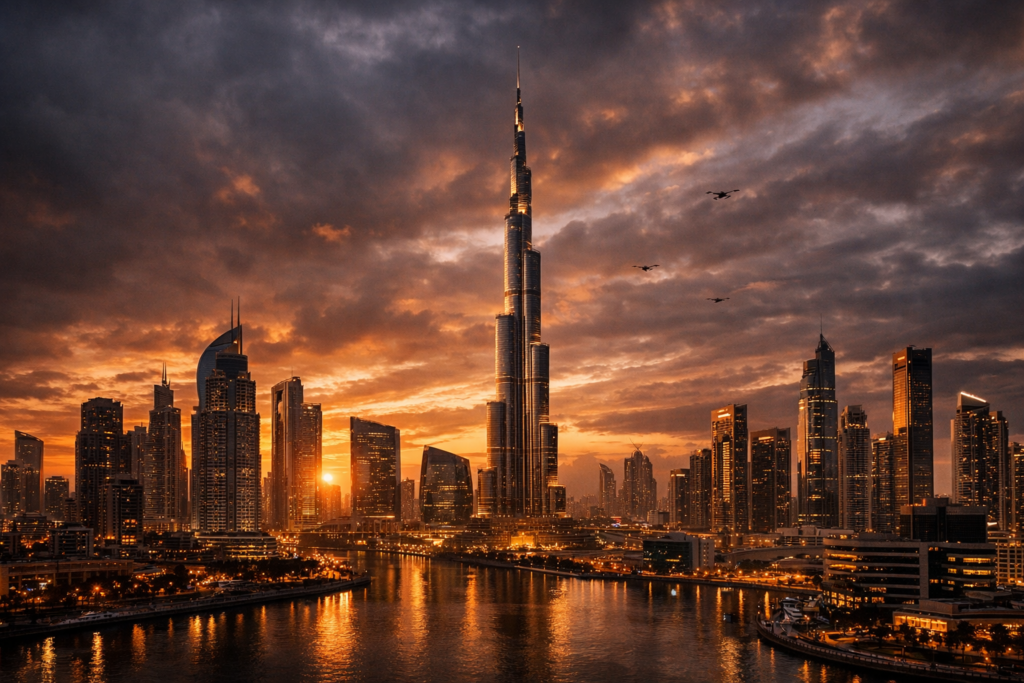
Dubai has developed a strong reputation as a safe haven for international investors. While instability affects many parts of the Middle East, the United Arab Emirates has maintained political stability, strong economic growth, and a globally connected financial system.
Because of this stability, capital often flows into Dubai during periods of global uncertainty. Wealthy investors seek places where their assets can remain protected, and Dubai offers several advantages that support this trend.
For example, the city provides a tax-friendly environment, world-class infrastructure, and residency programs linked to property ownership. These factors continue to attract entrepreneurs, investors, and professionals from around the world.
If you’re interested in the broader lifestyle advantages that attract global entrepreneurs to cities like Dubai, you might also enjoy our guide on building multiple streams of passive income, which explains how location choices can influence financial independence.
Historical events show that geopolitical crises often reshape investment flows rather than simply destroying markets. In many cases, instability in one region pushes investors to move their capital elsewhere.
For instance, during the Iraq War in the early 2000s, many regional investors shifted money into Dubai as a safer financial hub. This movement of capital helped accelerate development across the city and contributed to one of Dubai’s early real estate booms.
Later, during the Arab Spring in 2011, instability in countries such as Egypt and Syria caused many wealthy individuals to relocate assets to the UAE. As a result, Dubai experienced increased property demand as investors looked for stability and security.
These patterns highlight how geopolitical events can reshape investment behavior across global real estate markets.
More recently, the Russia-Ukraine war demonstrated how global conflict can influence Dubai real estate investment. As sanctions and financial restrictions increased in Europe, many wealthy investors began looking for alternative markets.
Dubai quickly emerged as one of the most attractive destinations. The city’s open financial system, luxury lifestyle, and strong property market drew investors seeking both asset protection and long-term growth opportunities.
As a result, Dubai experienced a significant increase in property transactions during this period. Luxury villas, waterfront developments, and high-end apartments became especially popular among international buyers.
For readers exploring how global wealth trends influence lifestyle choices and investment strategies, our article on Build Wealth in Your 20s: 5 Smart Ways That Actually Work, which also explains why many young investors are paying closer attention to international markets.
When geopolitical tensions rise, financial markets usually react quickly. The same pattern can also affect property markets. Therefore, the short-term impact of the Iran war on Dubai real estate is something many investors are watching closely.
In the early stages of any regional conflict, uncertainty tends to influence investor behavior. Some buyers pause large purchases while they evaluate geopolitical risks. Others move capital rapidly into markets they believe will remain stable.
Because Dubai attracts a large number of international buyers, these shifts in sentiment can temporarily influence the pace of property transactions. However, the direction of that impact is not always negative. In many cases, uncertainty elsewhere actually increases demand for Dubai property.
To better understand the potential effects, it is helpful to examine three key factors that typically influence the Dubai real estate market during geopolitical conflict.
In the short term, geopolitical conflict can create volatility across financial markets. The same dynamic can influence the Iran war Dubai real estate outlook, particularly during the early stages of uncertainty. Investors tend to reduce risk exposure while they assess how events might unfold.
Because Dubai attracts global capital, shifts in investor sentiment can temporarily slow transaction volume. Some buyers pause large purchases, while others wait for clearer signals from the market.
One indicator that investors monitor during these periods is the Dubai Real Estate Index (DFMREI). This index tracks publicly listed real estate companies in Dubai and often moves alongside broader property sentiment. When volatility increases, the index can provide an early signal of whether investor confidence is weakening or stabilizing.
However, short-term volatility does not necessarily indicate long-term weakness. In many cases, markets experience temporary hesitation before stabilizing once investors gain clarity about geopolitical risks.
Interestingly, luxury real estate in Dubai often behaves differently from the broader market during times of global uncertainty. High-net-worth individuals tend to move capital quickly when geopolitical risks increase. As a result, premium property demand can sometimes rise even while other segments slow down.
For example, luxury villa demand in areas such as Palm Jumeirah has surged during previous geopolitical tensions. Wealthy buyers often view these properties as both lifestyle assets and stores of value.
This trend reflects a broader pattern in global real estate. During uncertain periods, investors frequently shift capital into tangible assets located in politically stable jurisdictions. Dubai’s combination of global connectivity, strong infrastructure, and investor-friendly policies makes it particularly attractive to this type of buyer.
Consequently, even if mid-tier property demand slows temporarily, the luxury segment often remains resilient.
Another important factor shaping Iran war Dubai real estate trends is the movement of international capital. Dubai’s property market depends heavily on foreign investment, which means global wealth migration can significantly influence prices.
Historically, geopolitical instability has often pushed investors toward Dubai rather than away from it. When uncertainty rises in other regions, capital tends to flow toward cities perceived as stable global hubs.
For investors considering entry points, temporary market corrections can create opportunities. If geopolitical tensions were to slow property demand, prices in some areas could decline modestly in the short term. Historically, strategic buyers often look for entry levels 10–20% below recent market highs, particularly in high-quality developments or prime neighborhoods.
Importantly, Dubai’s long-term recovery patterns suggest that temporary corrections do not necessarily weaken the overall market trajectory. Following the 2008 global financial crisis, Dubai property prices experienced a sharp decline. However, over time the market stabilized and eventually recovered, driven by population growth, infrastructure development, and international investment.
In fact, several prime areas now trade far above their pre-2008 levels. This historical pattern highlights a key point for long-term investors: short-term geopolitical shocks may create volatility, but strong global cities often recover and continue growing over time.
For this reason, many analysts believe that even if the Iran conflict creates temporary uncertainty, Dubai’s real estate market could ultimately emerge stronger once stability returns.
The question many investors are asking is simple: could the Iran war actually crash Dubai real estate? While geopolitical conflict can influence markets, a true crash usually requires several economic pressures to occur at the same time.
Historically, property crashes are driven by factors such as oversupply, tightening liquidity, or sudden shifts in investor demand. Therefore, when analyzing the Iran war Dubai real estate outlook, it is important to consider the structural risks that could influence prices.
Below are three scenarios analysts often evaluate when discussing whether Dubai property prices could fall significantly.
One potential pressure on the Dubai real estate market is supply. After several years of strong growth, developers have launched a large number of new projects across the city. Some analysts estimate that over 200,000 new residential units could enter the market over the next few years.
If demand slows while this new supply enters the market, prices could experience temporary downward pressure. This dynamic has occurred in previous cycles when construction activity accelerated during strong economic periods.
However, Dubai’s population growth and continued influx of international residents help absorb much of this supply over time. New infrastructure projects, business expansion, and visa reforms continue to attract entrepreneurs, professionals, and investors to the city. As a result, supply increases do not always translate directly into falling prices.
Instead, the market often experiences periods of stabilization before demand catches up with new development.
Another factor shaping Iran war Dubai real estate risk is the market’s reliance on foreign buyers. Unlike many cities where local demand dominates, Dubai property transactions are heavily influenced by international investors.
Because of this global ownership structure, shifts in international sentiment can influence the pace of property purchases. If geopolitical tensions cause investors to delay large financial decisions, transaction volumes may temporarily slow.
At the same time, this international demand can also support the market. When instability rises in other regions, investors often move capital toward markets perceived as safe, business-friendly, and globally connected. Dubai frequently benefits from this type of wealth migration.
For that reason, foreign ownership can sometimes increase volatility in the short term while strengthening long-term demand.
EAlthough a full market crash is unlikely under normal conditions, analysts still consider several worst-case scenarios that could place pressure on Dubai property prices.
For example, a prolonged regional conflict could increase geopolitical uncertainty across the Middle East. If tensions escalate significantly, some investors may temporarily pause international property purchases.
Another potential risk involves travel disruption. Dubai’s economy depends heavily on tourism, aviation, and global business connectivity. If travel routes were severely disrupted for an extended period, economic activity could slow.
Finally, large-scale capital flight could also influence property markets. If global investors suddenly withdrew funds from regional markets, liquidity could tighten and transaction activity might decline.
However, it is important to note that these scenarios require multiple negative factors to occur simultaneously. In reality, Dubai’s strong infrastructure, diversified economy, and global financial connectivity have historically helped the city recover quickly from external shocks.
For many analysts, the more realistic outcome is not a crash but a temporary period of market adjustment followed by renewed growth as investor confidence returns.
At first glance, it may seem logical that geopolitical conflict in the Middle East would harm property markets in nearby cities. However, global financial history often shows the opposite pattern. In many cases, instability pushes investors to move capital toward locations that demonstrate strong security, stable governance, and reliable infrastructure.
The current situation in the region illustrates this dynamic clearly. While drones and regional tensions have targeted parts of the Gulf, the United Arab Emirates has demonstrated extremely effective air-defense and security capabilities. These defenses have helped protect critical infrastructure and maintain stability inside the country.
Because of this, many analysts believe that once the conflict subsides, investors may view Dubai as even safer than before. Rather than weakening the property market, the crisis could ultimately reinforce Dubai’s reputation as one of the most secure financial hubs in the region.
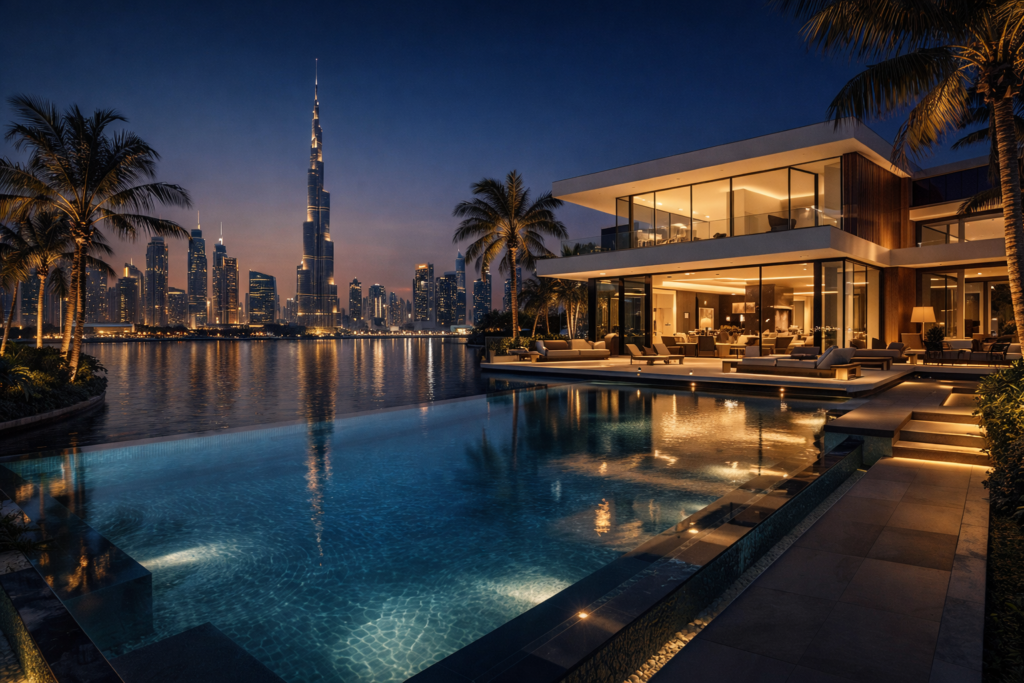
One of the strongest forces influencing property markets is global wealth migration. During periods of geopolitical uncertainty, high-net-worth individuals often move their capital toward locations that offer political stability and strong financial systems.
Dubai has repeatedly benefited from this pattern. Investors from across Europe, Asia, and the Middle East frequently relocate both assets and businesses to the city during periods of global instability.
Luxury villas, waterfront developments, and high-end apartments are particularly attractive during these moments. Wealthy investors often prefer tangible assets located in cities with strong legal systems and international connectivity.
As a result, geopolitical uncertainty can sometimes accelerate demand for Dubai real estate investment rather than reducing it.
Another important factor supporting the Dubai property market is the UAE’s long-standing reputation as a neutral and security-focused country. The government has invested heavily in defense technology, surveillance systems, and critical infrastructure protection.
Recent events have demonstrated how effective these systems can be. Despite regional tensions and drone threats, the UAE has maintained stability and protected major economic centers such as Dubai and Abu Dhabi.
For global investors, this type of resilience sends a powerful signal. It shows that the country has the capability to protect its infrastructure, financial institutions, and residents even during periods of regional instability.
Over time, this reputation for security can strengthen investor confidence in Dubai as a long-term investment destination.
Beyond security, Dubai offers several structural advantages that continue to attract international investors regardless of geopolitical tensions.
These advantages include:
Because of these factors, Dubai has positioned itself as one of the world’s most attractive cities for international entrepreneurs and investors. Even during periods of uncertainty, these structural benefits continue drawing capital into the market.
For this reason, some analysts believe that once regional tensions eventually decline, Dubai real estate could experience another surge of investment as global buyers recognize just how stable and secure the city truly is.
Periods of geopolitical tension often create uncertainty in financial markets. However, experienced investors know that uncertainty can also create opportunities. When markets react emotionally to global events, disciplined buyers sometimes find attractive entry points in high-quality assets.
For those watching the Iran war Dubai real estate situation, the key is to separate short-term headlines from long-term fundamentals. Dubai remains one of the fastest-growing global cities, with strong infrastructure, international connectivity, and continued population growth. Because of these fundamentals, many investors focus on long-term value rather than short-term volatility.
A smart strategy during uncertain periods involves carefully evaluating when to enter the market, which types of properties tend to perform best, and what risks should still be monitored.
Whether investors should buy property during geopolitical uncertainty depends largely on their time horizon. Short-term traders may hesitate during periods of volatility, but long-term investors often look for opportunities created by temporary market hesitation.
If tensions cause some buyers to delay purchases, transaction activity may slow briefly. In that environment, sellers sometimes become more flexible on price. For patient investors, this can create opportunities to negotiate better deals on high-quality properties.
Historically, strong global cities often experience temporary corrections before continuing their long-term growth trajectory. Dubai has demonstrated this pattern before. After periods of global uncertainty, investor confidence typically returns once stability becomes clearer.
For long-term investors, the key is to focus on location quality, developer reputation, and long-term demand drivers rather than short-term headlines.
Not all real estate performs equally during periods of uncertainty. Certain property types tend to attract more demand because they appeal to wealthy buyers seeking security, lifestyle quality, and long-term value.
In Dubai, several property categories historically remain strong even during volatile periods:
These types of properties often attract international buyers who prioritize lifestyle quality and long-term asset protection. Because supply in prime locations is limited, these properties tend to hold value better than more speculative developments.
Even though Dubai’s long-term outlook remains strong, investors should still remain aware of several risks that could influence the property market.
One potential concern is a supply glut if too many new residential developments enter the market at the same time. Large waves of new construction can temporarily pressure prices until demand catches up.
Another factor to monitor is oil price volatility, which can influence economic activity across the broader Gulf region. While Dubai’s economy is diversified, regional economic trends can still affect investor sentiment.
Finally, a global recession could slow international investment flows. Because Dubai attracts buyers from around the world, global economic conditions sometimes influence property demand.
For disciplined investors, understanding these risks helps create a balanced strategy. By focusing on high-quality assets, strong locations, and long-term fundamentals, investors can navigate geopolitical uncertainty while positioning themselves for future market growth.
So, will the Iran war crash Dubai real estate?
Based on historical patterns and current market fundamentals, a full collapse in Dubai property prices appears unlikely. In fact, the opposite trend has often occurred. During periods of geopolitical instability, global investors frequently move capital toward cities that offer stability, security, and strong economic infrastructure.
Dubai has repeatedly benefited from this pattern. The city’s reputation as a safe financial hub, combined with its international connectivity and investor-friendly policies, continues to attract global wealth even during uncertain times.
While short-term volatility may occur, particularly if investor sentiment becomes cautious, the long-term outlook for Dubai property remains strong. Population growth, international business expansion, and global wealth migration all continue to support demand.
History also offers an important lesson. After the 2008 global financial crisis, Dubai’s property market experienced a sharp correction. However, the market eventually stabilized and recovered as economic growth resumed and international investment returned. Today, many prime areas trade far above their pre-2008 levels.
Because of this resilience, many analysts believe that even if geopolitical tensions temporarily slow the market, Dubai real estate could ultimately emerge stronger once stability returns.
Will the Iran war crash Dubai real estate?
A full market crash is unlikely based on historical trends. While geopolitical tensions may create short-term volatility, Dubai has often attracted additional investment during regional instability. Global investors frequently move capital toward stable financial hubs such as Dubai.
Is Dubai property safe during Middle East conflicts?
Dubai has developed a strong reputation for political stability, security, and economic resilience. The UAE invests heavily in defense, infrastructure, and financial stability, which helps protect its economy even during regional tensions.
Why do investors move money to Dubai during wars?
During periods of global uncertainty, investors often shift capital toward cities that offer strong legal systems, international connectivity, and financial stability. Dubai’s tax advantages, modern infrastructure, and global business environment make it an attractive destination for this type of wealth migration.
Should investors wait before buying property in Dubai?
The decision depends on an investor’s strategy. Some buyers prefer to wait for potential short-term price adjustments, while long-term investors often focus on high-quality properties in prime locations regardless of temporary volatility. Historically, many investors who entered the Dubai market during uncertain periods benefited from long-term price appreciation.

Get insider updates on men’s lifestyle, travel, money, and success — delivered straight to your inbox every week.